

Warning signs in Alberta: what the yellow signs mean
Warning signs tell you early what is coming: something you will need to do, or a possible hazard on or near the road. Most are yellow diamonds. Here are the guide’s warning signs, grouped the way the guide groups them. The orange construction signs have their own page.p. 32p. 26
Checked against the Driver’s Guide (Spring 2026) on .
The short version
- A yellow diamond means caution: it warns of the hazard shown on the sign. An orange diamond is different: it gives construction area information.p. 26p. 25
- Warning signs can warn of a traffic rule ahead (such as a stop or yield), features or physical conditions of the road, and hazards you may need to respond to.p. 32
- A speed shown under a curve sign is the recommended top speed through that curve, and only under ideal driving conditions.p. 33
- In areas with wildlife warning signs, slow down, look well ahead and use caution.p. 84
- At a merge, neither the merging driver nor the drivers already on the highway have the right-of-way. It is a shared responsibility.p. 73
What warning signs are for
Warning signs give you advance notice of an action you’ll need to take, or of a possible hazard on or near the road. Some of them warn of:p. 32
The sign’s shape and colour tell you its type. A warning sign is a diamond with information or pictures on a yellow background.p. 25p. 26
All the sign shapes and colours side by side: Alberta road signs by shape and colour. Every sign in the guide on one page: Alberta road signs and their meanings.
Traffic regulations ahead
These signs warn you that a stop, a yield, traffic lights or a school bus stop is coming up, so you have time to get ready.p. 33p. 32
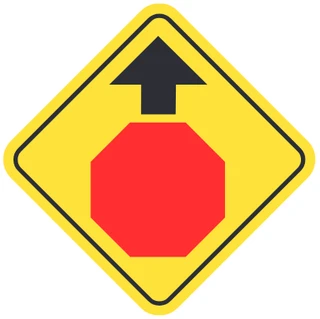 Stop ahead: a stop is coming up.p. 33
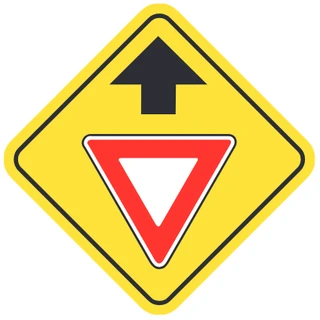 Yield ahead: a yield is coming up.p. 33
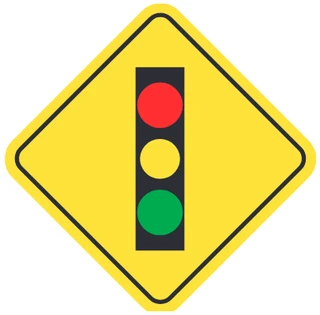 Traffic control signals ahead: there are traffic lights ahead.p. 33
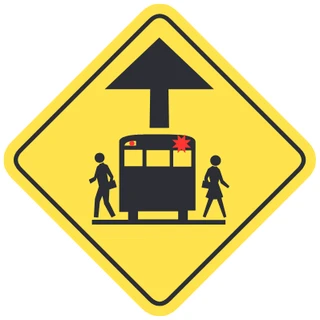 School bus stop ahead. On an undivided highway (not divided by a median), when a school bus has its alternating amber lights flashing, you must be ready to stop. This warns that its alternating red lights are going to begin flashing.p. 33p. 101
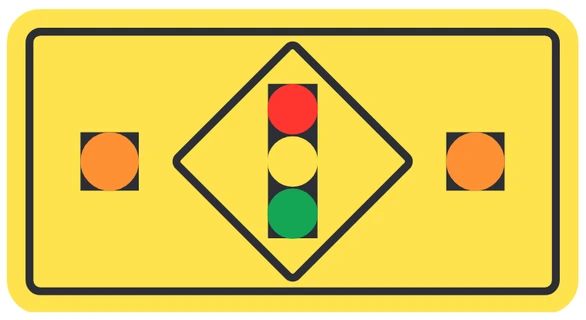 Stop at traffic lights ahead when yellow lights flashing: this sign stands before some intersections with traffic lights. When its yellow lights flash, prepare to stop: the light ahead is turning from green to yellow or yellow to red, or is already red.p. 33
More on the rules these signs warn about: stop, yield and speed limit signs, traffic lights and school buses and railway crossings.
Turns and curves ahead
Curves and hills are places where you can’t see far ahead. The guide calls them fixed hazards: they are always there, so watch for them.p. 89
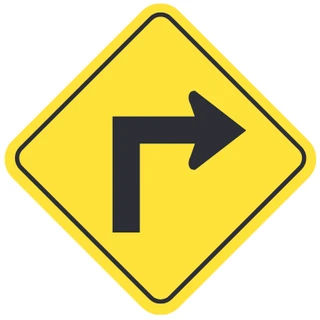 Sharp turn rightp. 33
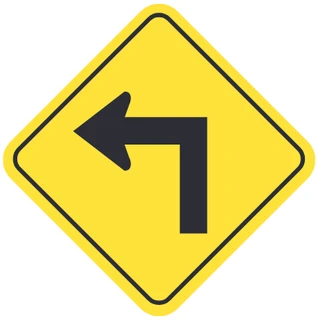 Sharp turn leftp. 33
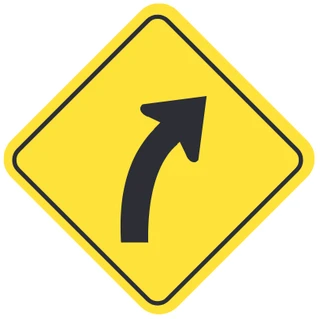 Curves rightp. 33
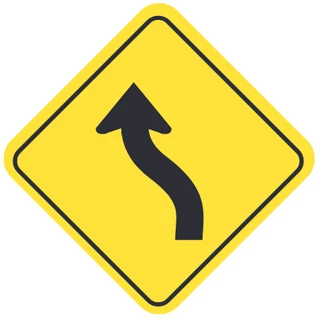 Road curves leftp. 33
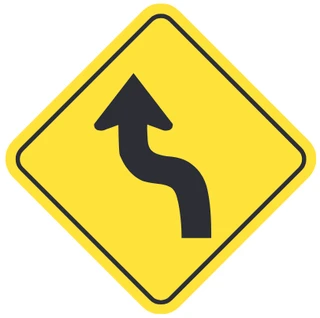 Road turns left/rightp. 33
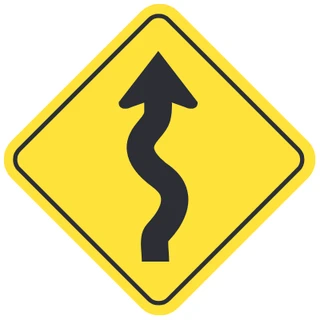 Winding roadp. 33
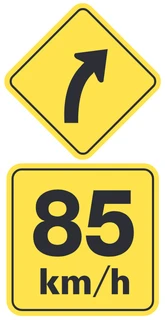 Recommended maximum speed through this curve under ideal driving conditions: the speed under the curve sign is a recommendation, and only for ideal conditions.p. 33
Chevron signs, which also mark a sharp bend, are in the road conditions group below.p. 35
Crossings ahead
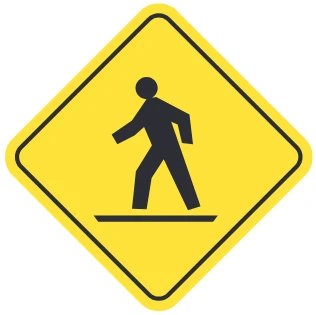 Pedestrian crossing: warns of a pedestrian crossing ahead.p. 34
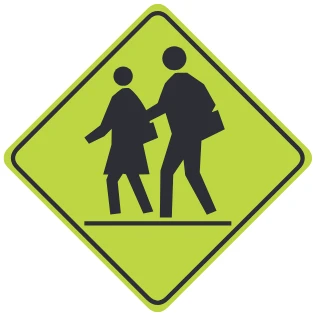 School crosswalk: a school crossing is ahead.p. 34
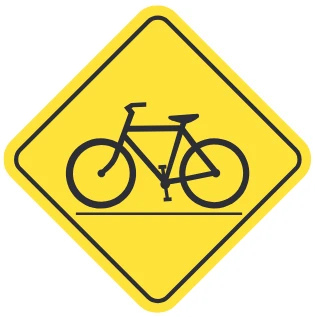 Bicycle crossing: warns of a bicycle crossing ahead.p. 34
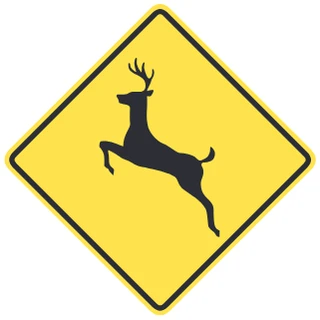 Animal crossing: slow down, look well ahead and scan the sides of the road for animals.p. 34p. 84
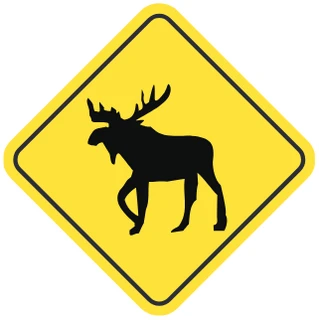 Moose crossing: this is a wildlife warning sign too. Slow down, look well ahead and use caution.p. 34p. 84
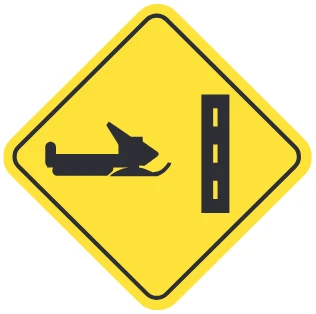 Motorized snow vehicles crossing: warns of a crossing for motorized snow vehicles ahead.p. 34
Intersections ahead
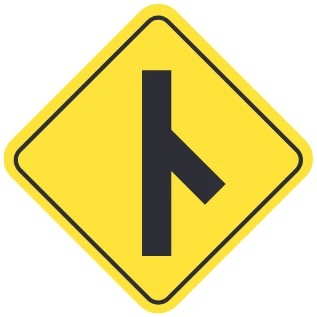 Hidden road rightp. 34
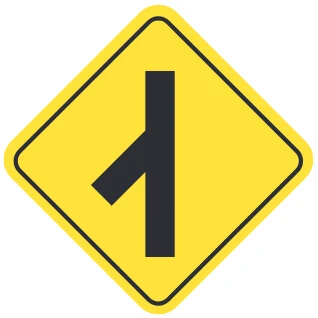 Hidden road leftp. 34
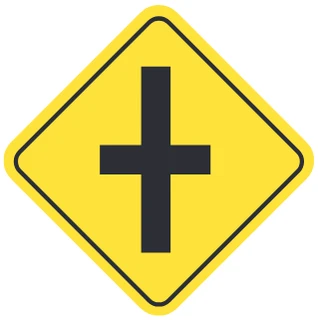 Hidden roadp. 34
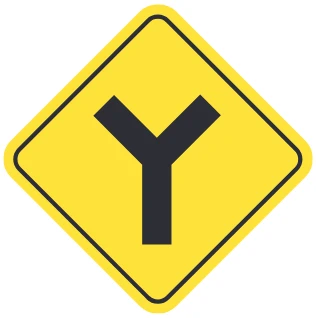 Y intersectionp. 34
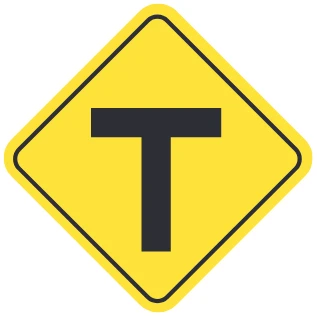
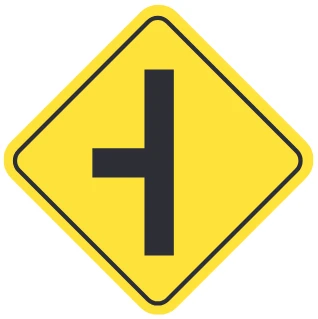 T intersection: the guide shows both of these versions.p. 34
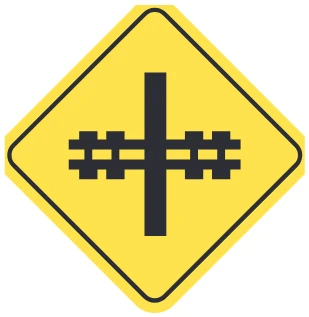 Railway crossing: a railway crossing is ahead. Look, listen and slow down, because you may have to stop for a train.p. 34p. 103
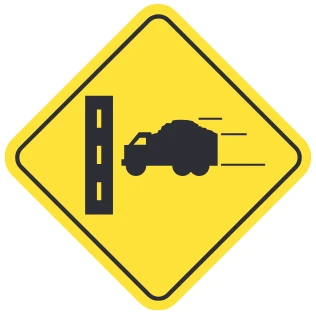 Trucks entering from rightp. 34
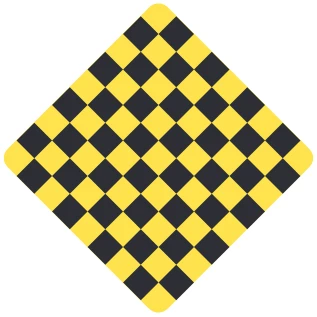 Dead endp. 34
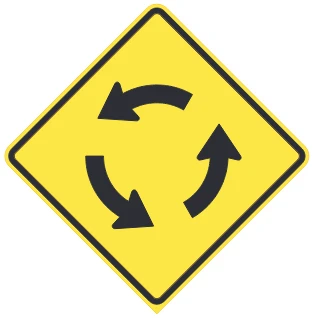 Roundabout: a roundabout is ahead. Traffic always goes around it counterclockwise, and when you enter, you must yield to traffic already in the circle.p. 34p. 61
More on these: right-of-way at intersections and roundabouts and traffic circles.
Roads that join: merging and added lanes
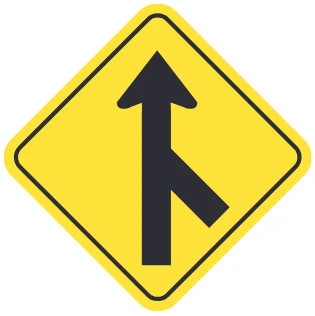 Merging traffic: the roads ahead join.p. 34
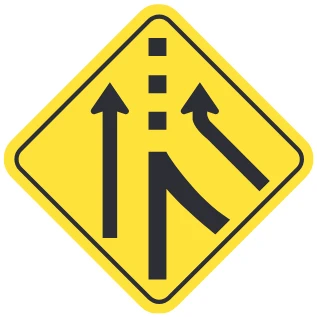 Free flow (added lane): the roads ahead run side by side but do not join.p. 34
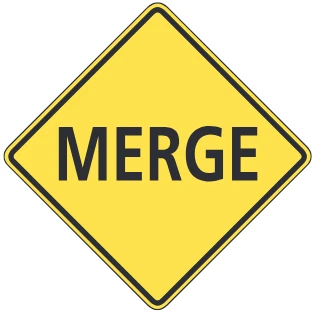 Merge: two roadways join into one. Plan your approach so you blend in smoothly with traffic, without stopping or slowing down suddenly.p. 73
Step by step: highway driving, merging and passing.
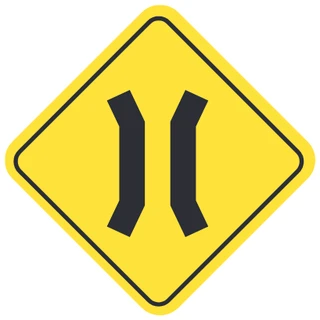
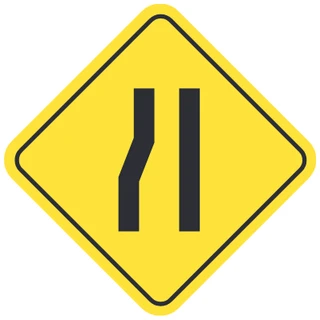
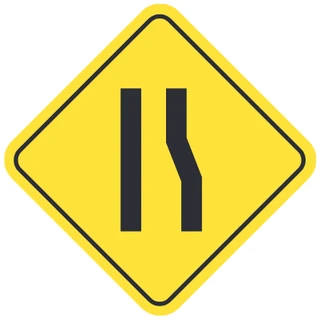
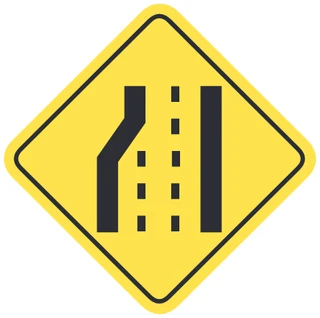
Narrow roads and divided highways
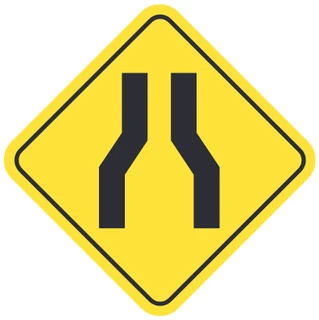
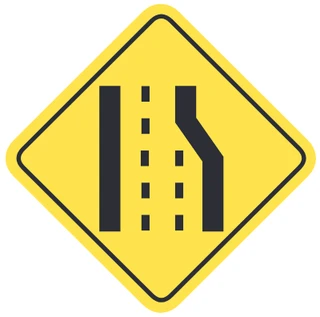
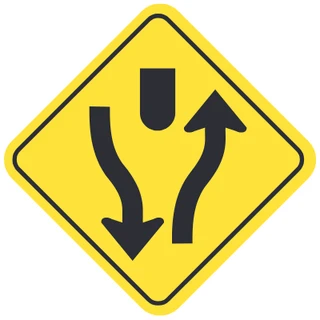
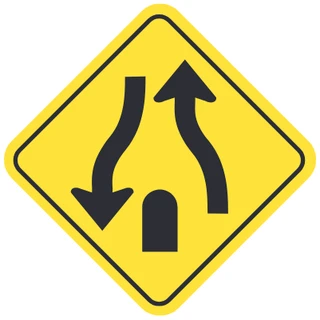
Changing road conditions
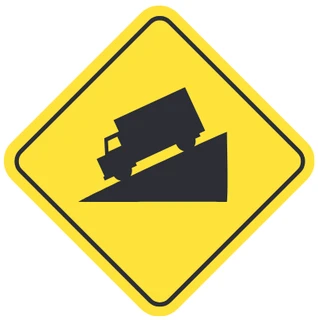 Hill. Going up, move to the right in your lane as you near the top, and don’t pass near the top of a hill on a two-lane highway. Going down a very steep hill, adjust your speed: it takes longer to stop.p. 35p. 76
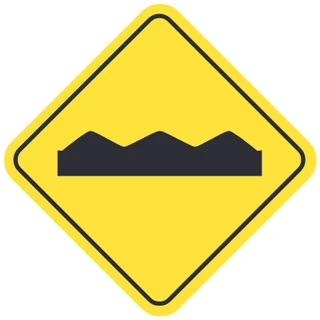 Bumpp. 35
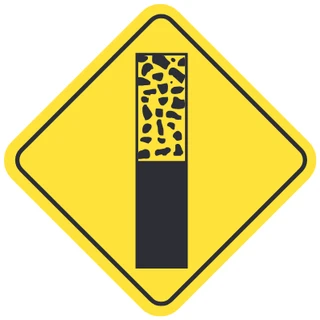 Pavement endsp. 35
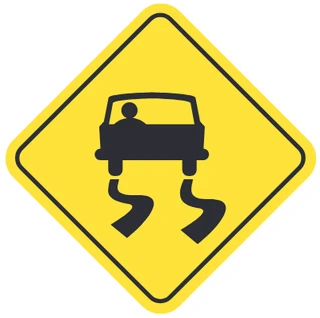 Slippery when wet. On wet roads your tires may lose contact with the road surface. This is called hydroplaning. If it happens, don’t brake: ease off the accelerator, and look and steer where you want the front of the vehicle to go.p. 35p. 83
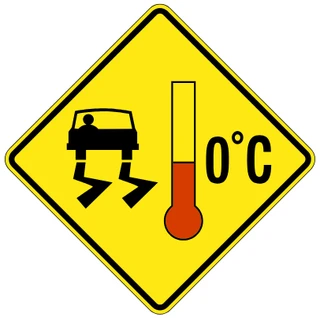 Bridge ices. Bridge decks and overpasses tend to get slippery patches more easily than other road surfaces. Use extra caution and try not to change lanes or speed when you don’t need to.p. 35p. 82
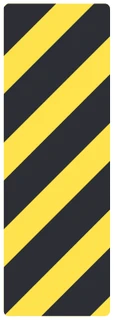 Hazard marker, object on rightp. 35
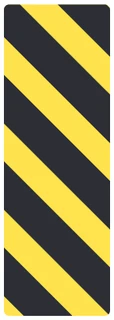 Hazard marker, object on leftp. 35
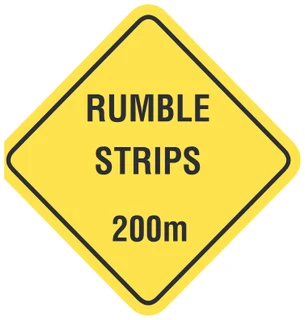 Rumble stripsp. 35
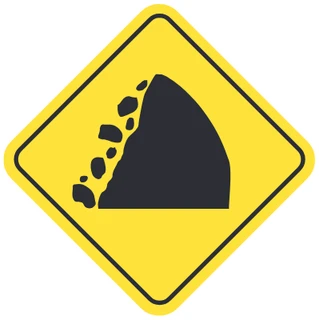 Falling rockp. 35
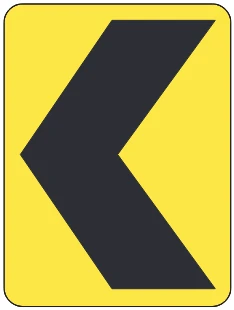
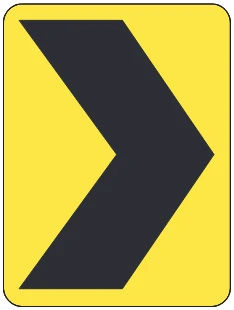 Chevron sign: shows a sharp bend in the road.p. 35
Ice, snow and skids: winter driving in Alberta.
Sharing the road with cyclists
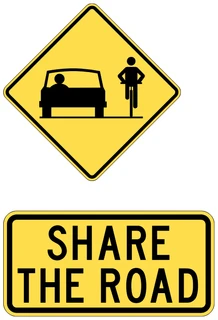 Share the road: warns drivers to give cyclists space.p. 35
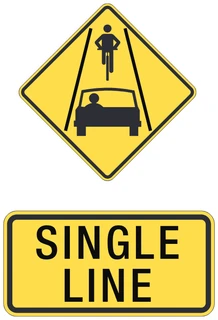 Single line: cyclists are allowed full use of the lane ahead, and the lane is too narrow for side-by-side driving.p. 35
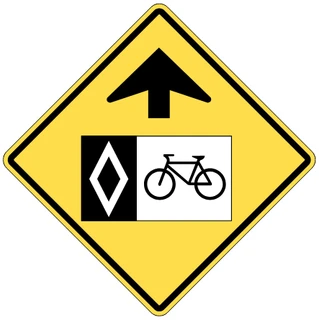 Reserved bicycle lane ahead. You may not drive in a bicycle lane, except to turn or to get into or out of a parking spot. When you do cross it to turn, watch carefully for bicycles.p. 40
More on cyclists, pedestrians and large trucks: sharing the road in Alberta.
Warning signs in other chapters: railways and log trucks
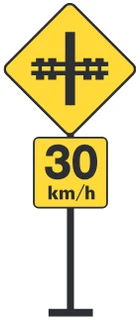 Railway advance warning sign with a speed sign: look, listen and slow down, because you may have to stop for a train. The speed sign below it is the recommended speed for the crossing, and it will be less than the posted speed for the road.p. 103
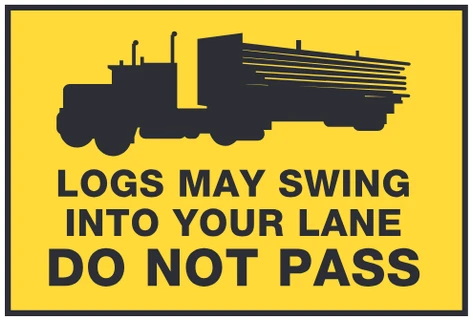 Logs may swing into your lane, do not pass: never pass a log hauling truck that is turning left or right off the highway. The logs can stick out from the back of the truck by as much as nine metres (30 feet), and when it turns, they can block some or all of the lanes.p. 100
Test yourself on real sign pictures with the road signs practice test. The other sign groups: stop, yield and speed limit signs, green circle and red circle signs, construction zone signs and information and guide signs.
Learners ask
What colour and shape are warning signs in Alberta?
A yellow diamond means caution: it warns of the hazard shown on the sign. Most warning signs in the guide are yellow diamonds, but a few have other shapes, such as the chevron sign for a sharp bend. An orange diamond gives construction area information.p. 26p. 35p. 25
What does the speed sign under a curve warning sign mean?
It is the recommended maximum speed through that curve under ideal driving conditions. The guide lists it with the signs for a turn or curve ahead.p. 33
What does a chevron sign mean?
A chevron sign shows a sharp bend in the road. The guide lists it with the warning signs for changing road conditions.p. 35
What does the yellow sign with flashing lights before an intersection mean?
It is the “stop at traffic lights ahead when yellow lights flashing” sign. When its yellow lights flash, prepare to stop: the traffic light ahead is turning from green to yellow or yellow to red, or is already red.p. 33
What is the difference between the merging traffic and added lane signs?
Merging traffic means the roads ahead join. Free flow (added lane) means the roads ahead run side by side but do not join. At a merge, neither the merging driver nor the drivers already on the highway have the right-of-way.p. 34p. 73
What should you do when you see a wildlife crossing sign?
Slow down, look well ahead and use caution, and scan the sides of the road for animals. Be extra careful at dusk and dawn, when animals tend to be more active. If you see one animal, there may be more.p. 84