

Winter driving and skids in Alberta
Alberta winters bring freezing rain, very low temperatures, blowing snow, blizzards and heavy snowfalls. When the roads are poor, the most important thing is to reduce your speed.p. 83
Checked against the Driver’s Guide (Spring 2026) on .
The short version
- In bad weather, slow down, increase your following distance and allow more time for your trip.p. 81
- Black ice is often invisible. If the asphalt looks shiny and black instead of grey-white, slow down without braking.p. 82
- In a skid, keep off the brake and the gas, and look and steer where you want the front of the vehicle to go.p. 78
- Don’t use cruise control on poor roads: on ice it keeps accelerating and you could lose control.p. 83
Get your vehicle ready
Ice, snow and slippery spots
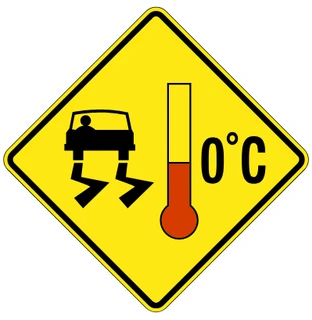
- Black ice is moisture frozen on the road, and you often can’t see it. Shiny, black asphalt instead of grey-white is the clue: slow down without braking.p. 82
- Shaded areas can stay icy after the sun has melted the rest of the road.p. 82
- Bridges and overpasses get slippery patches sooner than other roads. Take extra care and avoid unnecessary lane or speed changes.p. 82
- Intersections ice up faster from exhaust, engine heat and spinning wheels. Allow more time and distance to stop and start.p. 83
- Thaws are slippery too: melting snow, and the thin layer of water that forms as frost comes out of the ground.p. 83
Rain and hydroplaning
In rain, use low beams: high beams reflect back at you as glare. Spray can cover your windshield, and be careful not to splash other vehicles and pedestrians.p. 83
Fog, smoke and poor visibility
- Your headlights must be on whenever you can’t clearly see 150 metres (500 feet) ahead. Daytime running lights aren’t enough: your tail lights stay off.p. 81
- In smoke and fog, use low beams. High beams reflect back at you as glare.p. 82
- If it’s no longer safe to keep driving, slow down, pull well off the road to a safe place, turn on your hazard lights and wait for conditions to improve.p. 82
- With no safe place to park, get yourself and your passengers to a safe spot away from the vehicle, in case it is hit.p. 82
How to get out of a skid
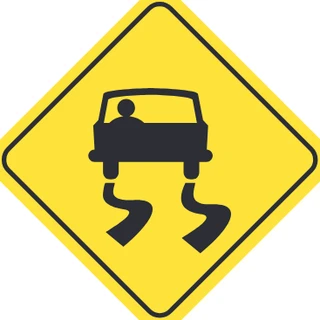
Skidding means you have lost control. Keep your foot off the brake, look and steer where you want the front of the vehicle to go, and point the tires along the centre of your lane without large steering changes.p. 78p. 79
- Braking skid (no ABS, wheels locked): take your foot off the brake so the wheels roll and steering returns. Look and steer where you want to go. Brake again firmly, but not hard enough to lock the wheels.p. 79
- Power skid (wheels spinning from too much gas): ease off the gas, steer where you want to go without over-correcting, then accelerate gently.p. 79
- Cornering skid (sliding sideways in a turn): take your foot off the gas, don’t brake, and look and steer where you want to go.p. 79
Most skids come from driver error. They happen when you:p. 78
Plan ahead so you don’t have to brake or steer suddenly, drive smoothly, and slow down on unfamiliar roads or in poor conditions.p. 78
Braking hard: with and without ABS
In an emergency, the goal is to stop as quickly as possible without losing control.p. 78
- With ABS (most vehicles): press the brake with steady, firm pressure. Don’t pump or release it; the pedal will vibrate. Look and steer where you want to go.p. 78
- Without ABS: press firmly to just before the wheels lock (threshold braking). If they lock, ease off slightly to get steering back, then press firmly again without locking them.p. 78
If you get stranded
- If you’re stuck off the highway and your vehicle is in a safe place, it’s usually safer to stay with it.p. 83
- Run the engine just enough to stay warm, and open a window a little to keep air moving and prevent carbon monoxide poisoning.p. 83
- Carbon monoxide can leak in from a faulty exhaust, and you can’t see, smell or taste it. Have the exhaust checked whenever the vehicle is serviced.p. 83