

Weave zones (continued)
Vehicles will cross paths in a weave zone.
Curves
Curves require special attention. To drive on curves safely, drivers should remember:
- If you need to reduce your speed, do it before entering the curve, and stay centred in your lane.
- To stay centred in your lane, look well ahead and around the curve. This will assist you with steering and speed control.
- Maintain a safe and steady speed after entering the curve.
- Do not pass vehicles on curves on highways with one lane in each direction. It is unsafe and illegal.
- Wet or icy roads can make curves slippery and increase the risk of danger while driving.
The lines show where the drivers are looking to help them stay centred in their lanes . Due to kinetic energy, your vehicle will want to go straight ahead on a curve even though you are turning the wheels. If your tires lose traction with the road as you enter or travel around a curve to the left (Vehicle A in the above diagram), your vehicle may skid to the right side of the road. If this happens, stay off the accelerator and brake.
If your tires lose traction with the road as you enter a curve to the right (Vehicle B in the above diagram), your vehicle may skid into oncoming traffic. If you skid in a curve, stay off the brake and the accelerator. Continue to look in the direction you want to go, and make small steering adjustments to come out of the skid.
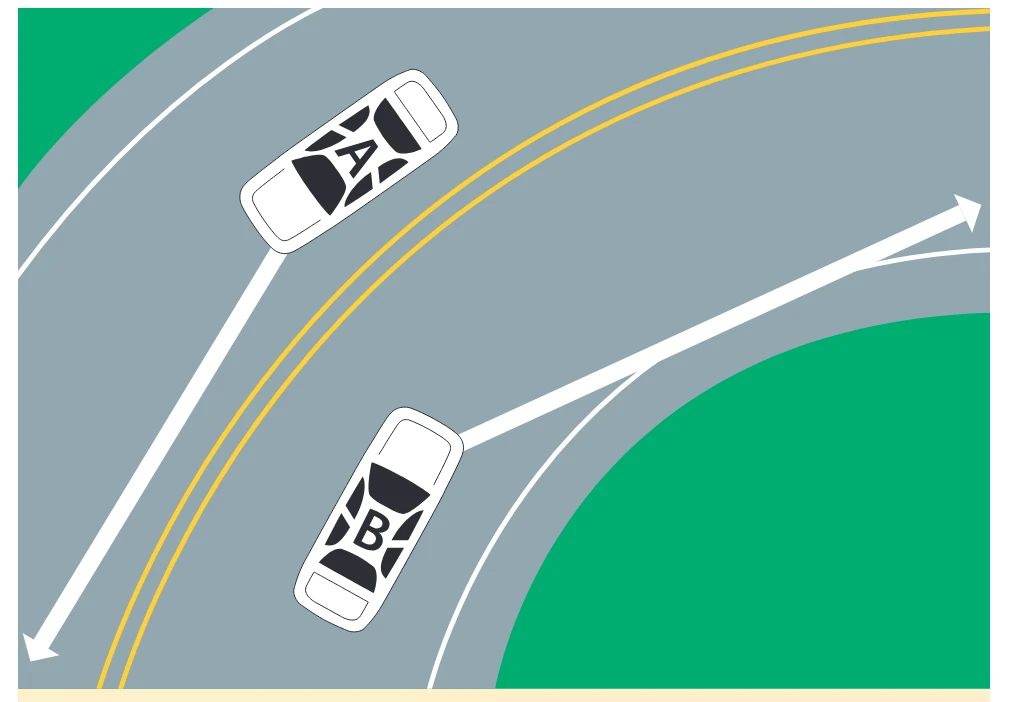
Vehicles A and B travelling through curves