

How to drive through roundabouts and traffic circles in Alberta
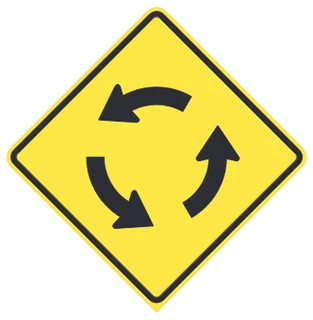
Roundabouts and traffic circles are round intersections built to keep traffic moving safely. They follow simple rules: once you know who yields, which lane to pick and when to signal, they are easier than they look.p. 61
Checked against the Driver’s Guide (Spring 2026) on .
The short version
- Traffic always goes counterclockwise around the centre island.p. 61
- Before you enter, yield to traffic already in the circle.p. 61
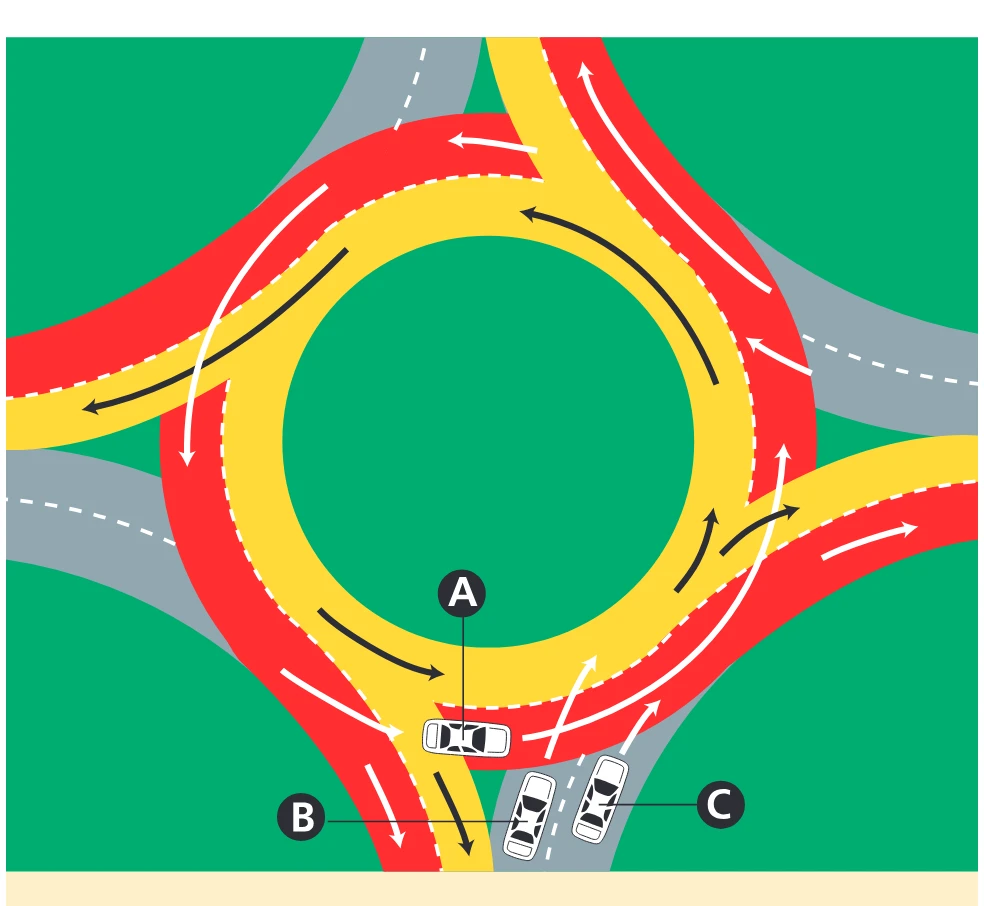
- In a two-lane circle: taking the first exit, use the right lane. Going past the first exit, use the left lane.p. 63p. 62
- Turn on your right signal after you pass the exit before yours.p. 61
- Don’t change lanes in the circle. If you can’t exit safely, go around again.p. 62p. 63
Roundabouts and traffic circles
Both work the same way, and you follow similar rules in each. A roundabout has a smaller centre island and a tighter curve, which keeps speeds low. It may also have a sloped curb to give large trucks more room.p. 61
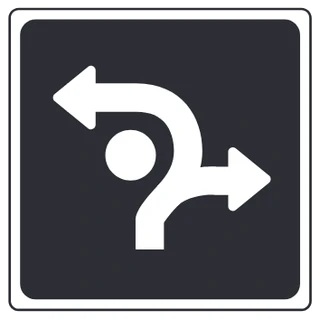
Pedestrian crossings are set back from the circle, so drivers and pedestrians can see each other better. Roundabouts come in different shapes and sizes, so watch for and obey the signs and pavement markings.p. 61
One-lane roundabouts, step by step
- As you approach: look for pedestrians and cyclists at the crosswalks at the entrance and the exits.p. 61
- Entering: yield to drivers already in the circle.p. 61
- Taking the first exit: use your right signal as you approach, and leave it on until you have left the circle.p. 61
- Taking any other exit: turn on your right signal as you reach the exit you want, after passing the exit before it. This tells other drivers you are leaving at the next exit.p. 62p. 61
Two-lane roundabouts: which lane to use
- Enter only when it’s safe, and stay in the lane you entered in. Do not change lanes in the circle.p. 62
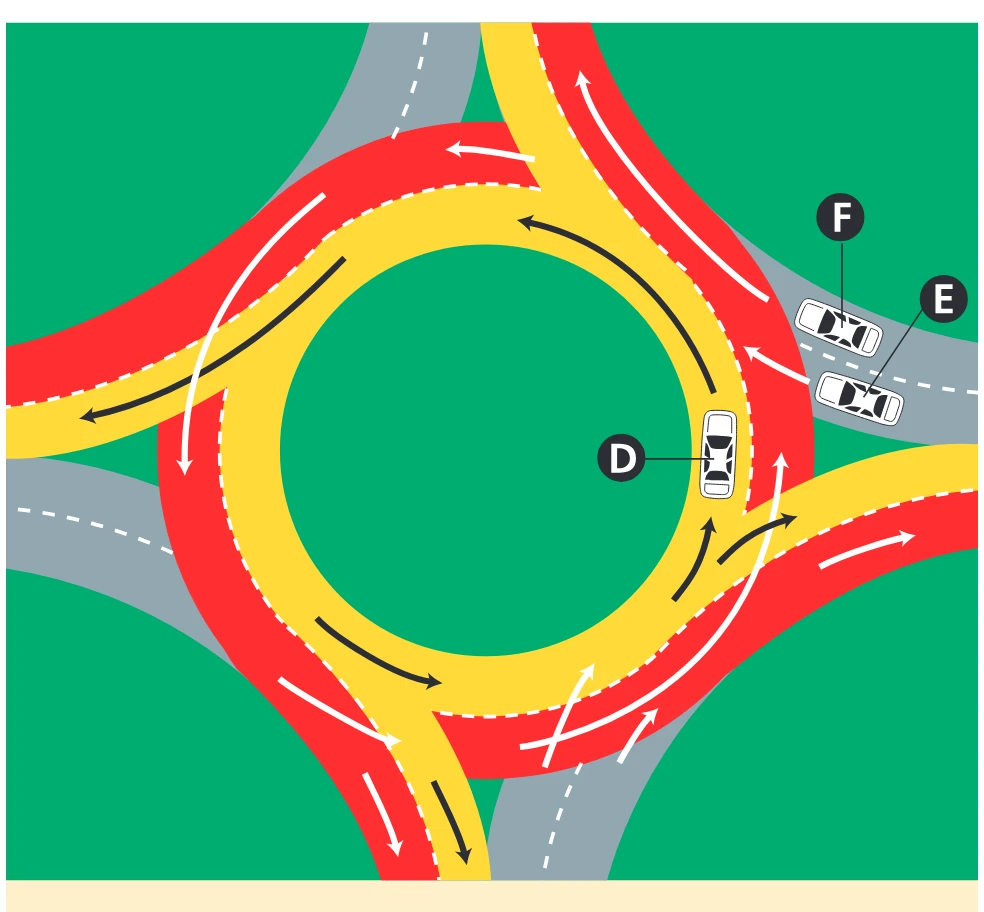
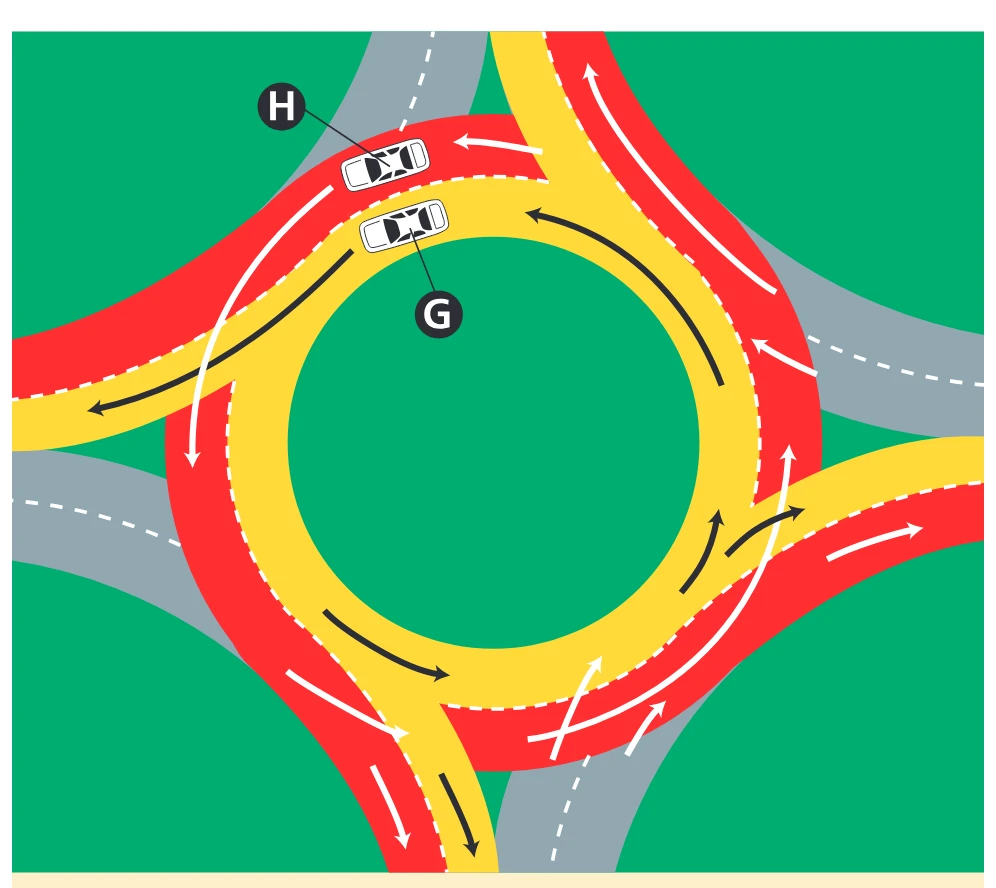
- Inside the circle, drivers on the right yield to drivers on the left.p. 62
- Leaving from the left lane: signal right once you pass the exit before yours, check for traffic in the right lane that may keep going around, and look for pedestrians at the crosswalk of your exit.p. 63
- If you can’t stop or exit safely, stay in your lane and go around the circle again.p. 63
Who yields: the guide’s diagrams
Stop signs, four-way stops and the other intersections: Right-of-way at Alberta intersections.