Study guide3 min read
Traffic lights and signals in Alberta
Traffic lights use green, yellow and red to control traffic at intersections and where roads merge. The colour of the light decides which stream of traffic has the right-of-way.p. 22
Checked against the Driver’s Guide (Spring 2026) on .
The short version
- Solid red: stop before the stop line or crosswalk and stay stopped until it turns green, unless you are safely turning right after stopping.p. 22
- Solid yellow: stop, unless you are already so close that you can’t stop safely.p. 22
- Flashing red is treated like a stop sign. Flashing yellow means go with caution after yielding.p. 23
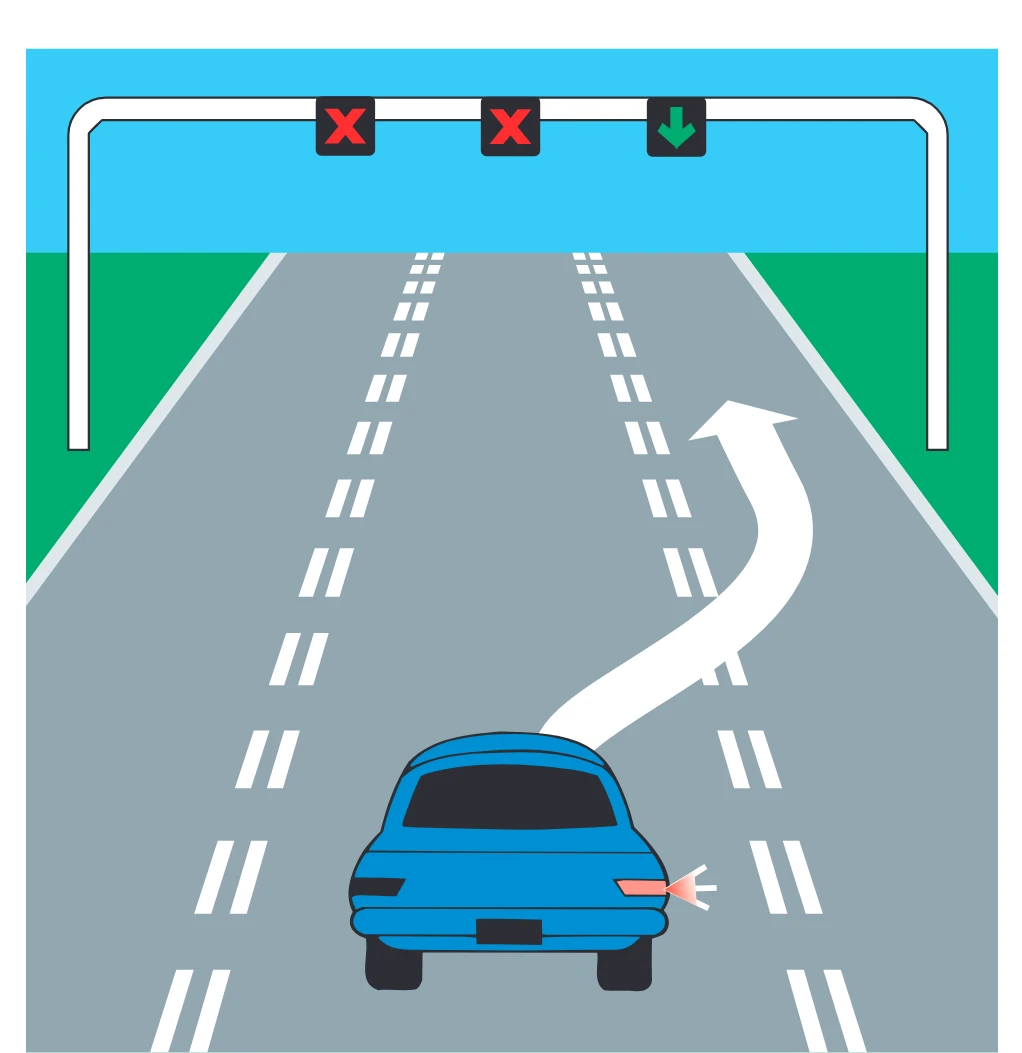
- A red X over a lane means don’t drive in it: oncoming traffic is using it.p. 24
The order of the lights
Solid red, yellow and green
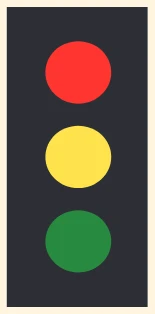
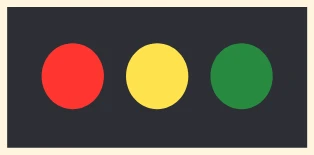
 Solid red: come to a complete stop before the stop line or crosswalk in front of you. With no stop line or crosswalk, stop before the intersection. Stay stopped until the light turns green, unless you are turning right after stopping. A solid double red means the same as a single red.p. 22
 Solid yellow: the light is about to turn red. Stop before the stop line or crosswalk, unless you are so close that stopping can’t be done safely. If you are already in the intersection, clear it safely.p. 22
 Solid green: you may go through without stopping, but when turning left you still yield to oncoming traffic, and when turning right or left you yield to pedestrians in the crosswalk.p. 22
Turning on a red light
- Right turn on a red: allowed unless a sign prohibits it. Come to a complete stop before the stop line or crosswalk, then turn when it is safe, yielding to other traffic.p. 22
- Left turn on a red: the only one allowed is from a one-way street onto a one-way street, after a complete stop, and only if you can turn safely after yielding. A sign can prohibit even that.p. 22
Green arrows

Flashing lights
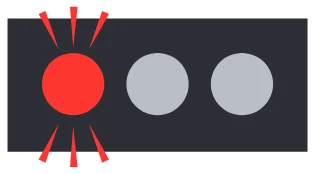 Flashing red: stop before the stop line or crosswalk (or before the intersection if there is none), then go only when it is safe and after yielding. Treat it like a stop sign. When the lights in every direction flash red, the intersection becomes a four-way stop.p. 23
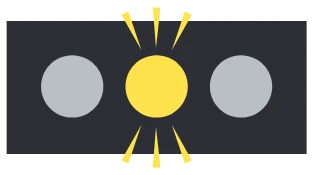 Flashing yellow: you may go with caution after yielding to pedestrians and other vehicles in the intersection.p. 23
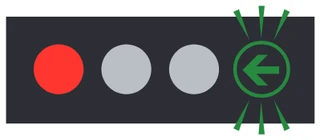
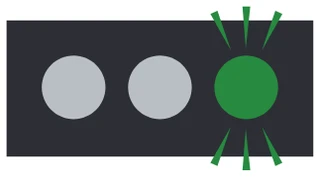 Flashing green: you may go straight, turn left or turn right without stopping. Oncoming traffic faces a red light, but you must still yield to pedestrians and vehicles lawfully in the intersection.p. 23
Pedestrian signals and crossing lights
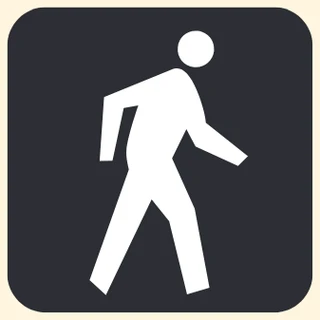 WALK: pedestrians may enter the crosswalk when it is safe.p. 23
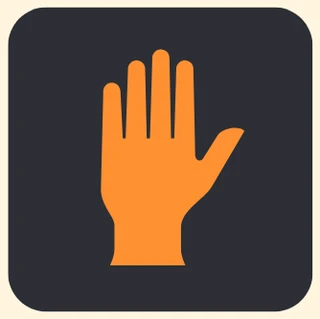 DON’T WALK: pedestrians must not start to cross. Anyone already crossing may continue and clear the crosswalk. Some signals count down the time left before the light changes.p. 23
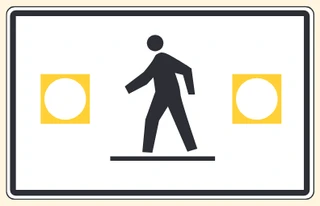 Crossing sign with yellow lights: when the lights are flashing, slow to a maximum of 30 km/h and yield or stop for pedestrians.p. 24
Where there are traffic lights but no WALK or DON’T WALK signals, pedestrians follow the colour of the light they face: red means don’t enter, yellow means finish crossing or don’t start, green means cross within the crosswalk.p. 24
Lane reversal signals
Some roads change the direction of a lane at different times of the day. Signals over the lanes switch between a red X and a green arrow.p. 24
 Red X: don’t enter or stay in that lane; oncoming traffic is using it. Move safely into a lane with a green arrow.p. 24
 Downward green arrow: you may drive in that lane.p. 24