

Pedestrian signals and signs (continued)
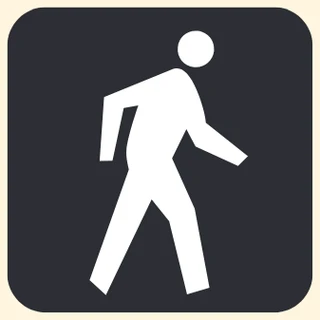
Pedestrian signal indicating "WALK"
Yellow lights on a sign with a symbol indicate that caution is required because of school zones or areas, playground zones or areas, school crossings, and pedestrian crossings. When the yellow lights are flashing, the driver must reduce speed to a maximum of 30 km/h and yield or stop for pedestrians. signs with yellow lights. signs without yellow lights.
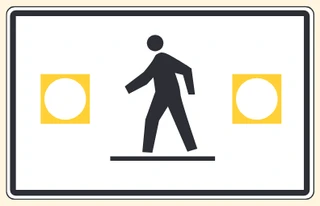
Pedestrian crossing sign with yellow lights 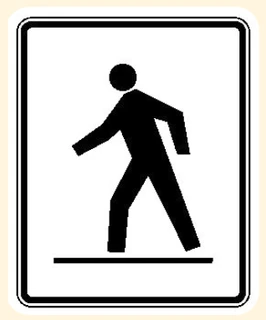
Pedestrian crossing sign without yellow lights
Special crosswalk overhead sign.
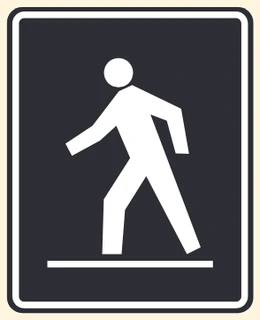
Special crosswalk overhead sign
At intersections with traffic control signals, but without pedestrian “WALK” and “DON’T WALK” signals, pedestrians must obey the rules for the colour of light they are facing.

Pedestrian signal indicating "DON'T WALK" or "WAIT"
- Solid red light. Do not enter the intersection.
- Solid yellow light. Clear the intersection if already crossing, or do not enter the intersection.
- Solid green light. Proceed across the road within any marked or unmarked crosswalk.
Pedestrians should check for vehicles before starting to cross.
Lane reversal signals
Lane reversal signals are used to control the direction of traffic on specific lanes of a roadway. A common use of this control is reversible lanes that change the flow of traffic during different times of the day. The signal(s) over one or more lanes change between a red X and a green arrow.

Lane reversal signal: solid red X
When a red X is displayed over a driving lane, the driver does not enter or remain in that lane. This signal indicates that the lane is being used by oncoming traffic. Move safely into a lane with a green arrow.
Downward pointing green arrow

Lane reversal signal: downward pointing green arrow
A driver facing the downward pointing green arrow is permitted to travel in that lane.