

Pavement markings
Markings on the roadway can provide the following information:
- lane identification separating opposing traffic
- traffic movement in the same direction
- traffic movement in the opposite direction
- passing zones and no passing zones
- lane use and designation
- pedestrian crosswalks
- stop lines
- parking areas
- word or symbol messages.
In some cases, pavement markings are used along with other traffic control signs or signals.
Lane markings
Lane markings can be yellow or white, single or double, solid or broken. These lines provide important information about direction of traffic flow, lane changing, lane restrictions, and passing.
Solid line markings
Solid lines mean that crossing the solid line to pass or change lanes is not permitted.
Broken line markings
Broken lines mean that crossing the broken line to pass or change lanes is permitted.
Yellow line markings
Yellow lines mean that vehicles on each side of the yellow line must travel in opposite directions. A yellow line should always be on the driver’s left side.
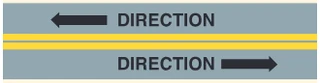
Pavement marking: double solid yellow lines
Passing safely is permitted across single solid yellow lines within an urban area. In all other instances, single or double solid yellow lines indicate that passing is not permitted.
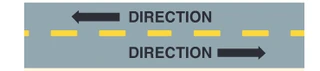
Pavement marking: broken yellow line
Broken yellow lines indicate that passing is permitted. Be sure that the lane is clear and the pass can be completed safely. together indicate that a pass is permitted for the driver who has the broken line on their side of the roadway. Passing is not permitted for the driver with the solid yellow line on their side of the roadway.
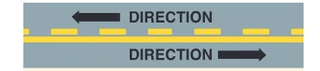
Pavement marking: solid yellow line with broken yellow line