

Study guide2 min read
Road lines and pavement markings in Alberta
Lines on the road can be yellow or white, single or double, solid or broken. Together they tell you the direction of traffic and whether you may change lanes or pass.p. 38
Checked against the Driver’s Guide (Spring 2026) on .
The short version
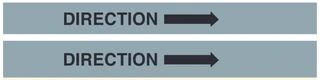
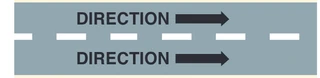
- Yellow lines separate traffic going in opposite directions. White lines separate traffic going the same way.p. 38p. 39
- Solid means don’t cross to pass or change lanes. Broken means you may.p. 38
- The yellow line should always be on your left.p. 38
- With a solid and a broken yellow line side by side, only the driver with the broken line on their side may pass.p. 38
Yellow lines: traffic going the other way
Traffic on each side of a yellow line travels in opposite directions, so the yellow line should always be on your left.p. 38
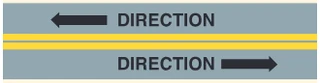 Solid yellow (single or double): no passing, except that within an urban area you may pass safely across a single solid yellow line.p. 38
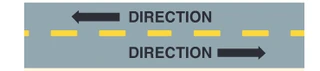 Broken yellow: passing is permitted. Make sure the lane is clear and the pass can be finished safely.p. 38
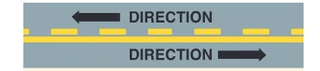 Solid and broken together: the driver with the broken line on their side may pass. The driver with the solid line on their side may not.p. 38
White lines: traffic going your way
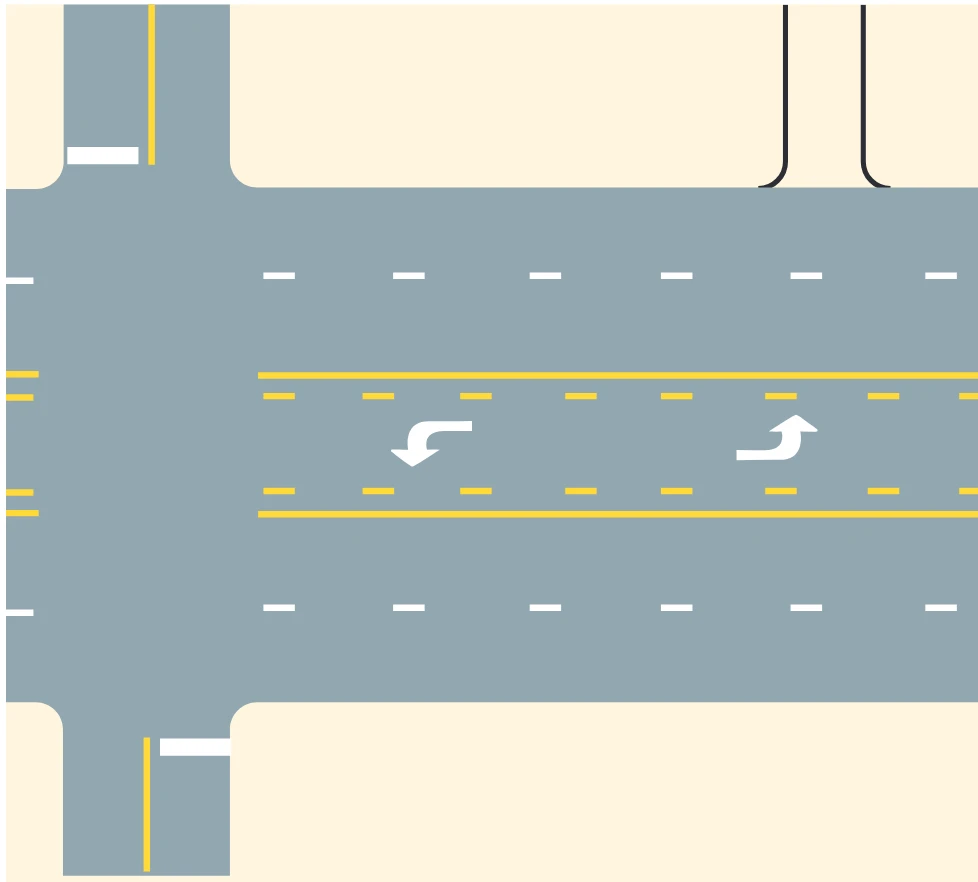
Arrows, diamonds and the shared turn lane
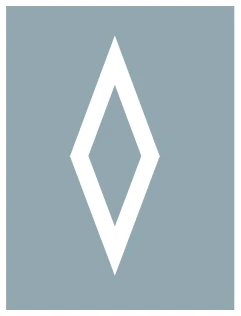
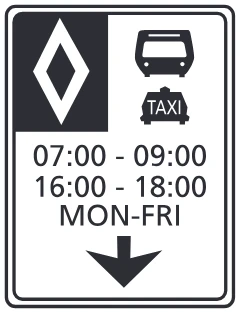
Bicycle lanes
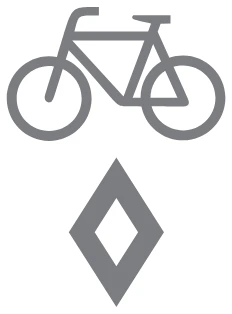
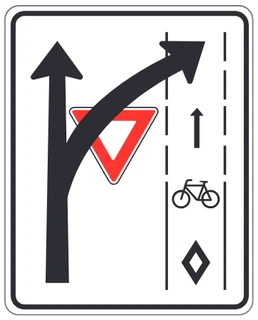
- Don’t drive in a bicycle lane, except to turn or to get into or out of a parking spot.p. 40
- Near corners the bicycle lane line is usually dashed: that’s where you may enter it to turn right. Watch carefully for bicycles when you do.p. 40
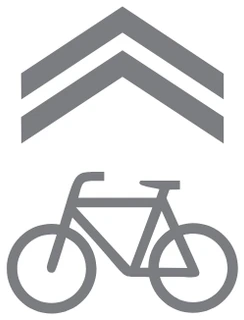
- A bicycle capped by a pair of arrows means cyclists share your lane: expect them there.p. 40
Crosswalks, stop lines and other markings
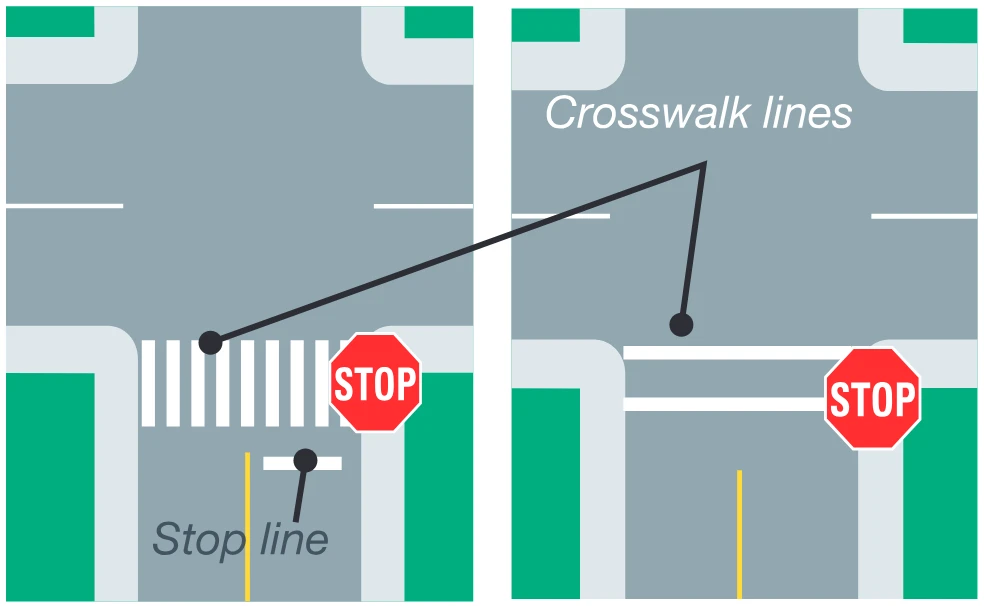 Crosswalk lines mark a pedestrian crosswalk. Crosswalks also exist at intersections without lines, unless a sign says there is no crossing. Stop lines show where vehicles must stop at intersections or railway crossings.p. 41
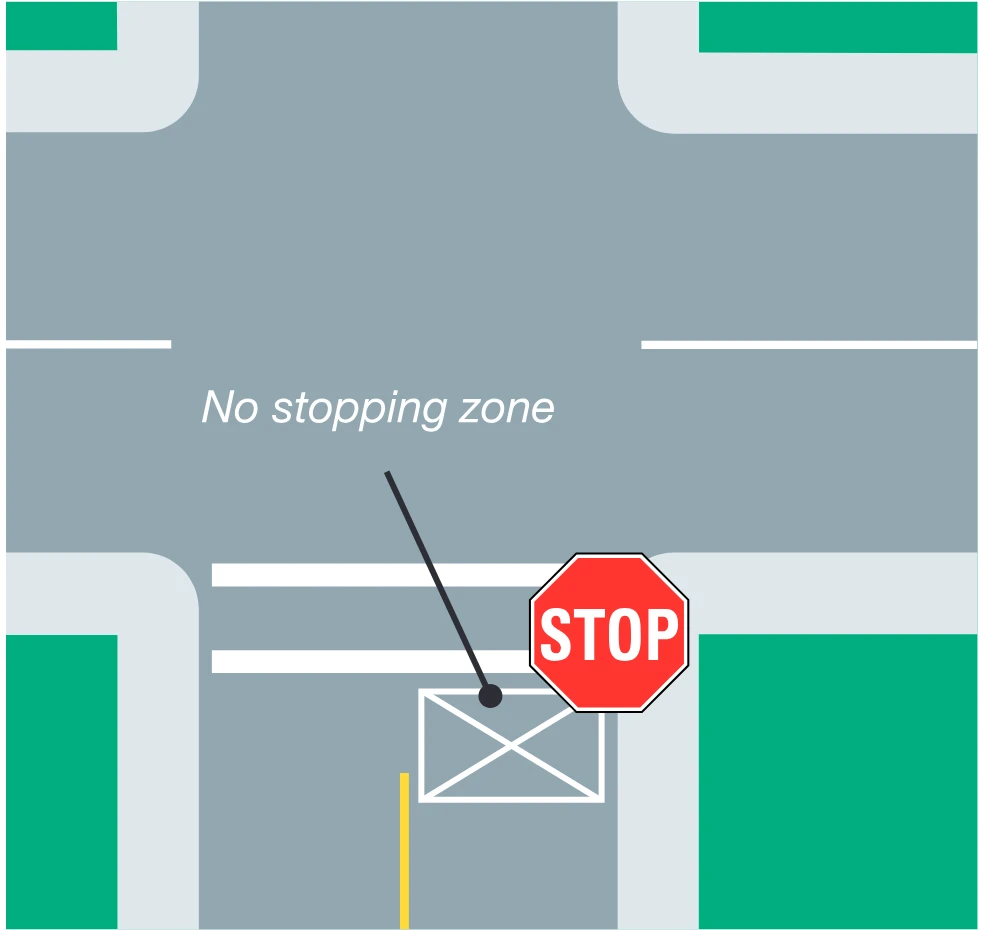 No stopping zone: don’t stop here. It is usually where large vehicles need extra room to turn.p. 41
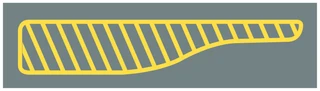 Painted island: not for travel by anyone. You may cross it only to enter or leave a driveway, alley or private drive, and you may not park or stop on it.p. 40
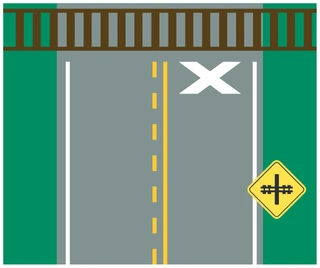 X on a rural highway: a railway crossing is ahead. An advance warning sign will also mark it.p. 40
Pavement markings are sometimes used together with signs or signals.p. 38