

Shared-use lanes
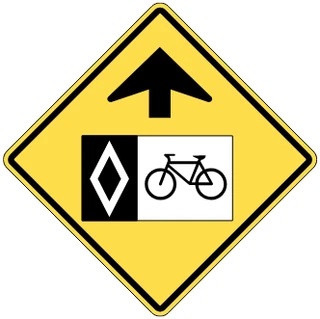
Reserved bicycle lane ahead
Bicycle lanes are painted in the curb lane of the road with bicycle-shaped stencils and street signage. Bicycle lanes can also be positioned beside a row of parking spots. Vehicles are not allowed to drive in the bicycle lanes, except when needing to turn or enter/exit a parking spot. The bicycle lane paint line is usually dashed near corners to indicate that it is permitted to enter the bicycle lane to turn right. Be very careful and watch for bicycles when entering the bicycle lane when turning.
Bicycle lane markings

Bicycle lane marking (bicycle and diamond) 
Shared lane marking (bicycle with two arrows)
This lane is reserved for cyclists. It is separated from traffic and parking by solid white lines and is marked with an image of a bicycle and diamond.
The image of a bicycle capped by a pair of arrows guides cyclists and reminds drivers to expect cyclists in the same travel lane. may appear at conflict zones where drivers are required to cross a bicycle lane.
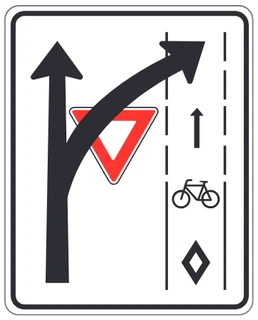
Turning vehicles yield to bicycles
X markings
X markings on rural highways indicate the approach to a railway crossing. An advanced warning sign will also indicate the approach to a railway crossing.
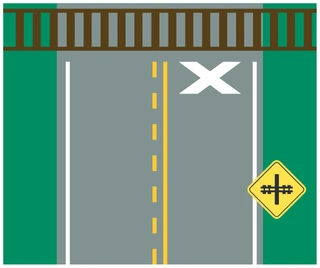
X pavement marking before a railway crossing
Painted island

Painted islands indicate that this area is not to be used for travel by any road users. Motorists can cross painted islands for the purpose of entering or leaving a driveway, alleyway, or private drive.
Do not park or stop in this area.