

Stop, yield, speed limit and direction signs in Alberta
Traffic regulatory signs tell you what you can or cannot do at a place or time: who has the right-of-way, which way to travel, how fast to go and where people cross. Here is each of them from the Driver’s Guide, and what to do when you meet it.p. 25
Checked against the Driver’s Guide (Spring 2026) on .
The short version
- Stop sign: come to a complete stop, check carefully for pedestrians and other traffic, and go only when it is safe.p. 26p. 58
- Yield sign: slow down, be prepared to stop, and give the right-of-way to traffic not facing the sign and to all pedestrians waiting to cross or in the crosswalk or intersection.p. 59p. 26
- Railway crossing sign: you must yield to all trains, and stop when a train is visible or sounding a signal and approaching within 500 metres of the crossing.p. 103
- Unless otherwise posted, the limit is 100 km/h on a provincial highway outside an urban area, 80 km/h on a provincial highway inside a city’s corporate limit and on a roadway outside an urban area, and 50 km/h on a roadway within an urban area.p. 27
- Yellow lights flashing on a pedestrian crossing sign: slow to a maximum of 30 km/h and yield or stop for pedestrians.p. 24
Stop, yield, wrong way and do not enter
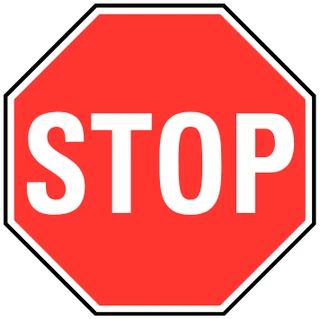 Stop: come to a complete stop and do not go on until it is safe. After stopping, check the intersection carefully for pedestrians and other traffic.p. 26p. 58
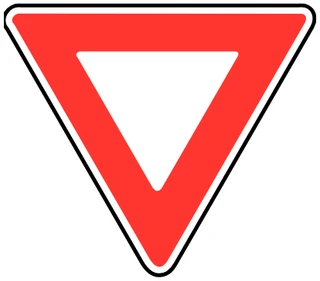 Yield: give the right-of-way to traffic not facing the sign, and to all pedestrians waiting to cross or already in the crosswalk or intersection. Slow down as you near the intersection, be prepared to stop, and wait for a safe gap in the traffic.p. 26p. 59
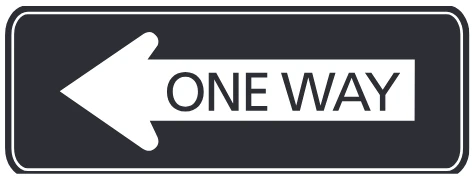
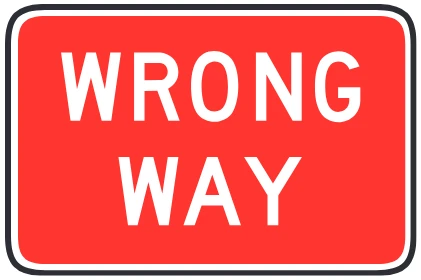 Wrong way: this sign tells you that traffic is moving in an oncoming direction: toward you.p. 26
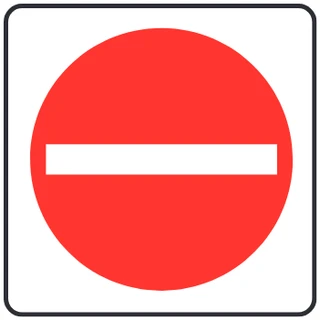 Do not enter: the Driver’s Guide lists this sign by name only. Like every traffic regulatory sign, it tells you what can or cannot be done at that place.p. 26p. 25
There are rules about where to stop at a stop sign:p. 58
- Where a stop line is marked, stop before the stop line. Before moving forward, give pedestrians and traffic the right-of-way.p. 58
- Where there is no stop line, stop before the marked crosswalk.p. 58
- With no stop line and no marked crosswalk, stop within three metres (10 feet) of the intersecting road (the road you are coming to), where you will not get in the way of pedestrians who are crossing or about to cross.p. 59
A flashing red traffic light is treated like a stop sign. When the lights in all directions are flashing red, the intersection becomes a four-way stop.p. 23
The full table: Demerit points in Alberta.
More on who goes first: Right-of-way at Alberta intersections and Traffic lights and signals.
Railway crossing signs
Never try to outrace a train to a crossing. Trains need a very long distance to stop, so always yield to them. Railway crossings are marked with signs.p. 103
 Railway crossing: a railway crossing sign means you must yield to all trains. Stop when a train is visible or sounding a signal and approaching within 500 metres (about five city blocks) of the crossing.p. 26p. 103
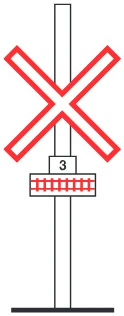 Railway crossing sign showing the number of tracks: railway crossing signs are at all public railway crossings. If there is more than one track, the crossing sign shows how many. When a train has passed, make sure another is not coming: a second train can come on another track from a different direction.p. 103p. 104
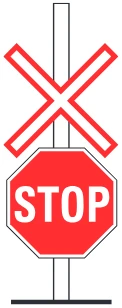 Railway crossing sign with a stop sign: come to a complete stop between five metres (15 feet) and 15 metres (50 feet) from the nearest rail. Do not go on until you are sure a train is not approaching.p. 103
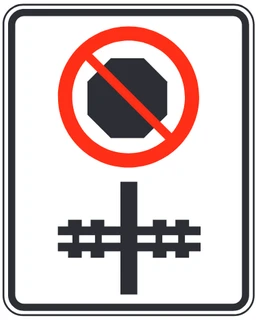 Do not stop on tracks: don’t get trapped on the tracks. Wait on the approach to the crossing, and cross only when you are sure you can clear it.p. 26p. 104
Even under full emergency braking, a train may need a kilometre or more to stop. At night or in poor weather, watch for railway signs and drive at a speed that lets you stop within the distance your headlights clearly light up.p. 104
Lights, bells and gates at crossings, and the advance warning signs before them: School buses and railway crossings in Alberta and Warning signs in Alberta.
Traffic direction signs
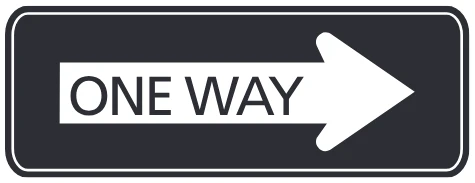
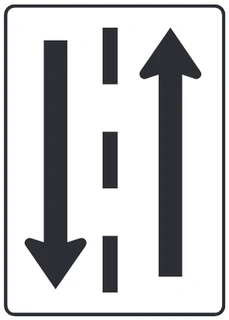
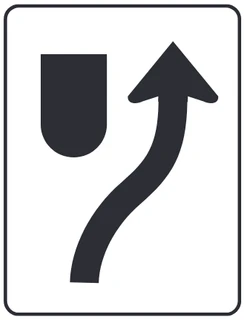
Speed limit signs
Speed limits are in kilometres per hour (km/h). A limit is not the speed you should always drive: it is the most you may drive when conditions are ideal. Any speed that is unsafe for the current conditions is illegal.p. 27
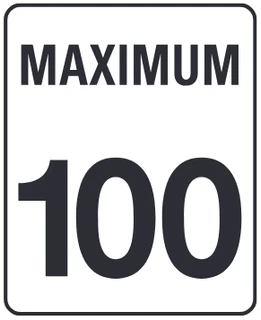 100 km/h, unless otherwise posted: the maximum on a provincial highway outside an urban area.Regulatory message on a white background · rectanglep. 27p. 25
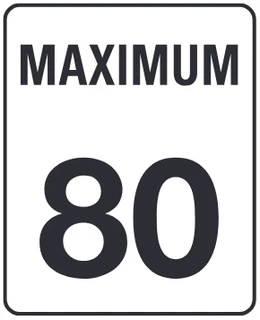 80 km/h, unless otherwise posted: the maximum on a provincial highway inside a city’s corporate limit, and on other roads outside an urban area (a provincial highway outside an urban area is 100 km/h).Regulatory message on a white background · rectanglep. 27p. 25
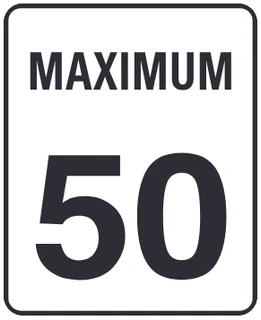 50 km/h, unless otherwise posted: the maximum on a roadway within an urban area.Regulatory message on a white background · rectanglep. 27p. 25
A provincial highway has a highway route marker with a single-, two- or three-digit number. A local road usually has no route marker, but may have a name, such as a township road (TWP RD 52) or a range road (RGE RD 252).p. 27
Municipalities (local governments) may have bylaws that set different limits. Know the local laws and watch all signs and posted speed limits.p. 27
School and playground zone limits and times: Speed limits, school and playground zones in Alberta.
Pedestrian crossing signs
Yellow lights on a sign with a symbol mean caution is needed because of school zones or areas, playground zones or areas, school crossings and pedestrian crossings.p. 24
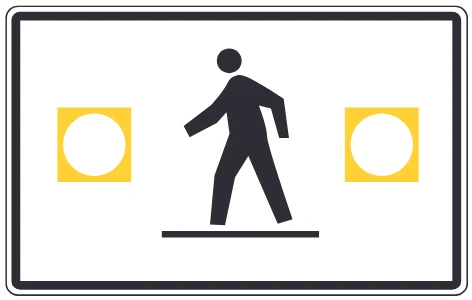 Pedestrian crossing sign with yellow lights: when the yellow lights are flashing, reduce your speed to a maximum of 30 km/h and yield or stop for pedestrians.p. 24
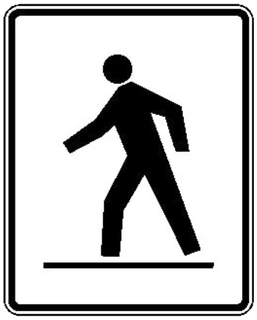 Pedestrian crossing sign without yellow lights: the Driver’s Guide lists this sign by name only. At any crosswalk, marked or unmarked, you must yield the right-of-way to a pedestrian who has entered it.p. 24p. 97
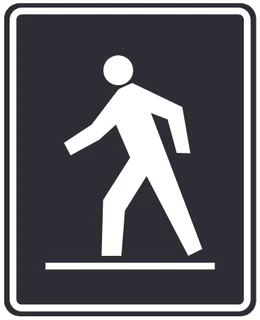 Special crosswalk overhead sign: the Driver’s Guide lists this sign by name only. When you stop for a pedestrian at a crosswalk, stop far enough back (about two to three car lengths) so traffic in other lanes can see the pedestrian and has time to stop.p. 24p. 97
More on pedestrians and cyclists: Sharing the road in Alberta.
Seat belt and slow down, move over signs
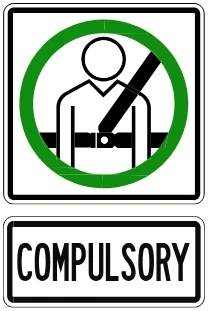 Seat belt use is required by law: the law requires you to wear your seat belt, even in a vehicle with air bags. As the driver, you are responsible for making sure every passenger under 16 is properly secured.p. 45p. 91
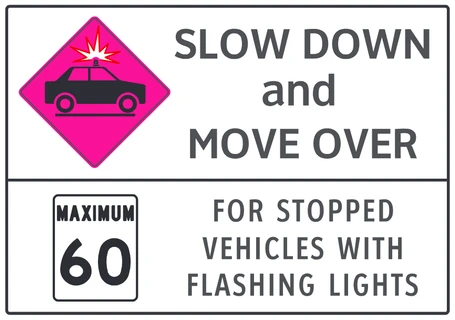 Slow down and move over: when you pass emergency vehicles or tow trucks stopped with their lights flashing, reduce speed to 60 km/h or the posted speed, whichever is lower. This applies to the lane or lanes right next to them, and the fine for speeding there is doubled.p. 85
If you are not in the lane next to the stopped vehicles, still slow down, leave lots of space, and watch for emergency personnel moving around the scene.p. 85
Every sign in the guide on one page: Alberta road signs and their meanings. What each shape and colour means: Road sign shapes and colours. Test yourself: the 20-sign road signs practice test.
Learners ask
What does a yield sign mean in Alberta?
You must give the right-of-way to vehicles that do not face a yield sign, and yield to all pedestrians waiting to cross or already in the crosswalk or intersection. Slow down as you near the intersection and be prepared to stop. Wait for a safe gap in the traffic before you go.p. 59p. 26
Where do you stop at a stop sign?
Where a stop line is marked, stop before it. With no stop line, stop before the marked crosswalk. With neither, stop within three metres (10 feet) of the intersecting road (the road you are coming to), where you won’t get in the way of pedestrians.p. 58p. 59
What does the X-shaped railway crossing sign mean?
It is found at all public railway crossings and means you must yield to all trains. Stop when a train is visible or sounding a signal and approaching within 500 metres (about five city blocks). If there is more than one track, the sign shows how many.p. 103
How far from the tracks do you stop at a railway crossing with a stop sign?
Come to a complete stop between five metres (15 feet) and 15 metres (50 feet) from the nearest rail. Do not go on until you are sure a train is not approaching.p. 103
What is the speed limit in Alberta when no limit is posted?
Unless otherwise posted: 100 km/h on a provincial highway outside an urban area, 80 km/h on a provincial highway inside a city’s corporate limit and on a roadway outside an urban area, and 50 km/h on a roadway within an urban area. Municipalities may set different limits by bylaw.p. 27
What do flashing yellow lights on a pedestrian crossing sign mean?
Caution is needed because of a pedestrian crossing. When the yellow lights are flashing, you must reduce your speed to a maximum of 30 km/h and yield or stop for pedestrians.p. 24