

Alberta road signs by shape and colour
A sign’s shape and colour change with the type of message it carries. Learn the pattern and you know what kind of sign you’re looking at: a rule, a warning, a school zone, construction or directions.p. 25p. 26
Checked against the Driver’s Guide (Spring 2026) on .
The short version
- A red circle with a slash means the action inside isn’t permitted. A green circle means it is.p. 25
- A yellow diamond warns of a hazard. An orange diamond is about construction.p. 26p. 25
- A fluorescent yellow-green pentagon marks a school zone or school area.p. 25
- Green signs give distances and transportation services. Blue signs show fuel, food, lodging or assistance.p. 26
Shapes and colours at a glance
The Driver’s Guide groups signs like this. The images are the guide’s own.p. 25
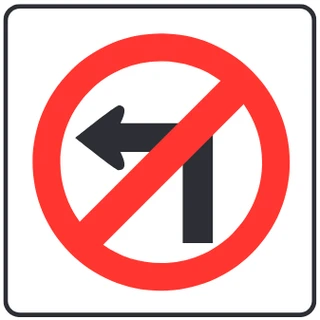 The action inside the circle is not permitted.Red circle and slash on a white background · squarep. 25
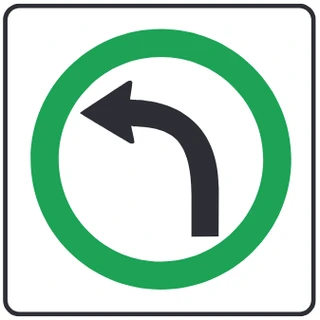 The action inside the circle is permitted.Green circle on a white background · squarep. 25
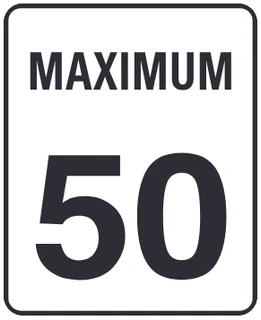 A regulatory message, such as a speed limit.Message on a white background · rectanglep. 25
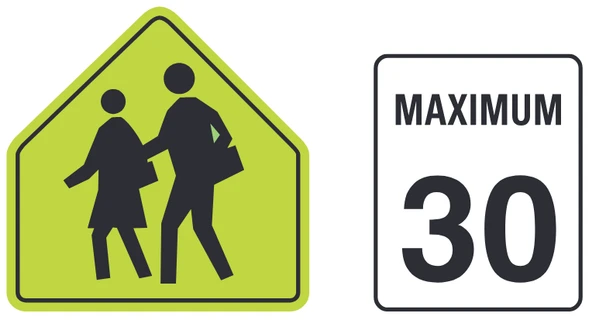
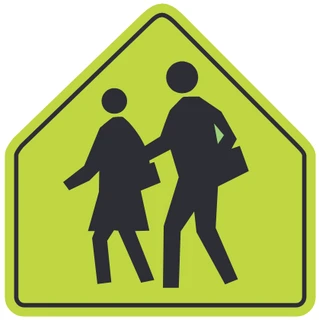 A school zone or school area.Fluorescent yellow-green background · pentagonp. 25
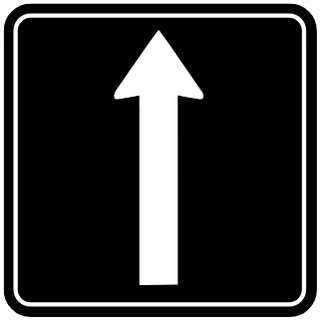 Lane control: the direction a vehicle must travel in that lane.White message on a black background · squarep. 25p. 28
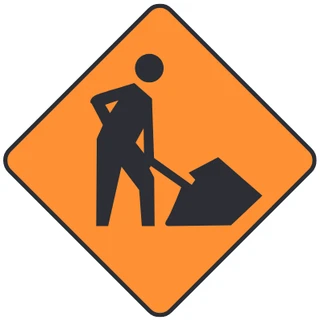 Construction area information.Information or a picture on an orange background · diamondp. 25
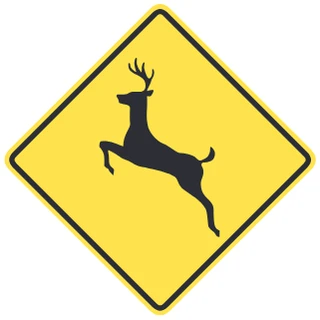 Caution: a warning of the hazard shown on the sign.Information or pictures on a yellow background · diamondp. 26
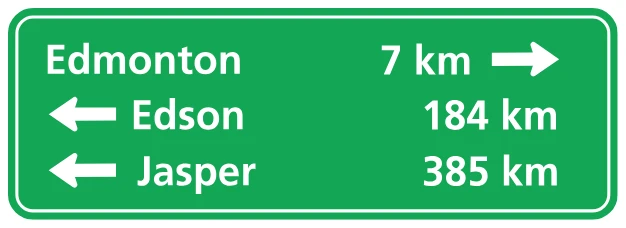
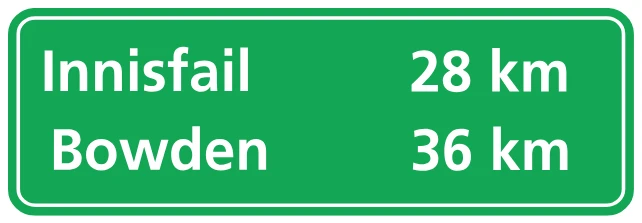 Information such as the distance to a destination.White message on a green background · rectanglep. 26
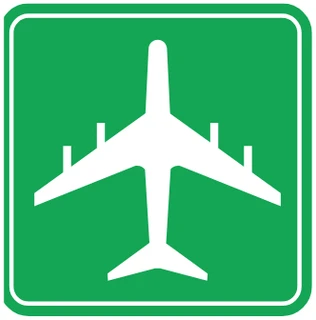 Transportation services, such as an airport or ferry.Information or pictures on a green background · squarep. 26
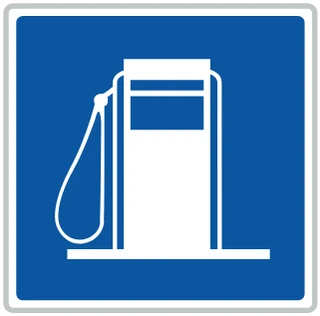 A place for fuel, food, lodging or assistance.White message on a blue background · squarep. 26
Signs that set a rule
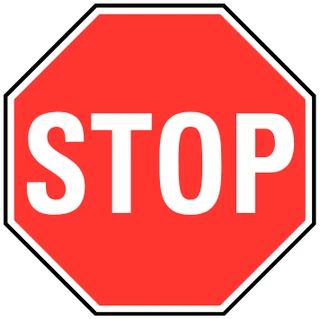 Stop: come to a complete stop and don’t go until it’s safe.p. 26
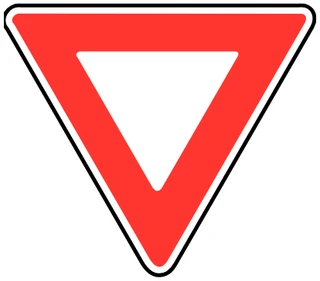 Yield: give the right-of-way to traffic not facing the sign, and to pedestrians waiting to cross or already in the crosswalk or intersection.p. 26
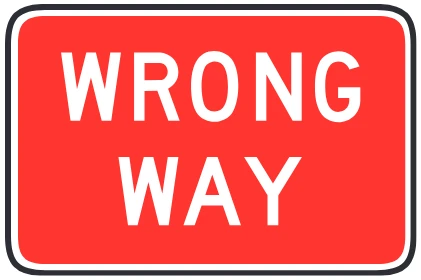 Wrong way: traffic is moving in an oncoming direction.p. 26
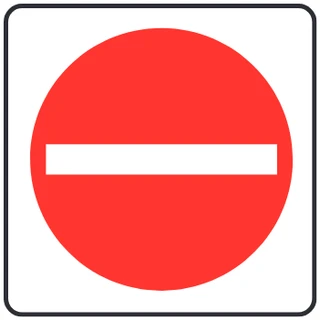 Do not enter.p. 26
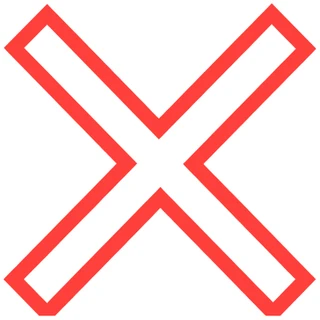 Railway crossing.p. 26
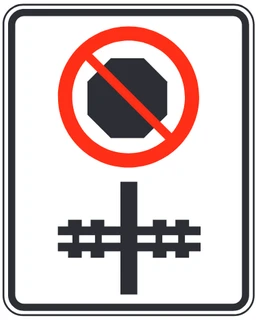 Do not stop on tracks.p. 26
The circle rule works for every subject: turns, trucks, bicycles, passing and more. A green circle on a white square means the action inside is permitted. A red circle with a diagonal red bar on a white square means it isn’t.p. 29
On no-parking and no-stopping signs, the arrow under the symbol shows where the rule applies.p. 30
Warning signs
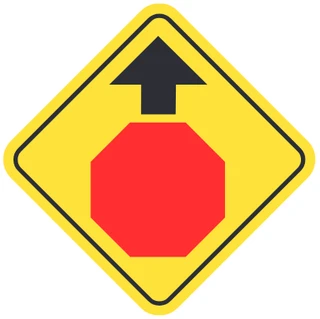
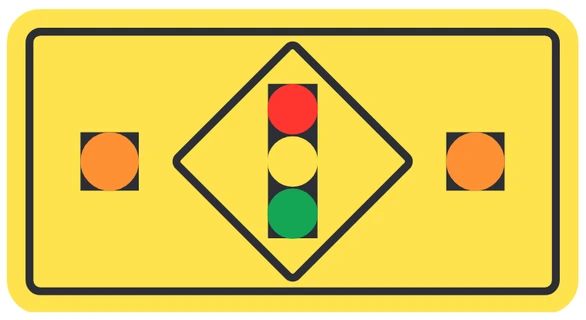
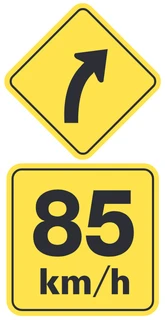
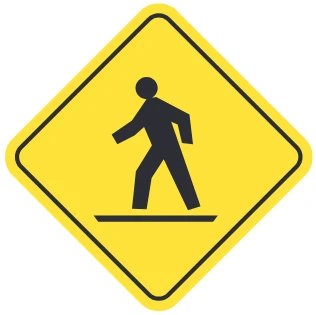
Warning signs give you advance notice of an action you’ll need to take, or of a possible hazard on or near the road. They warn of:p. 32
School and playground zones
- School zone: a school sign with a maximum speed posted. The limit is 30 km/h unless otherwise posted, on school days only, 8:00–9:30 a.m., 11:30 a.m.–1:30 p.m. and 3:00–4:30 p.m.p. 30p. 31
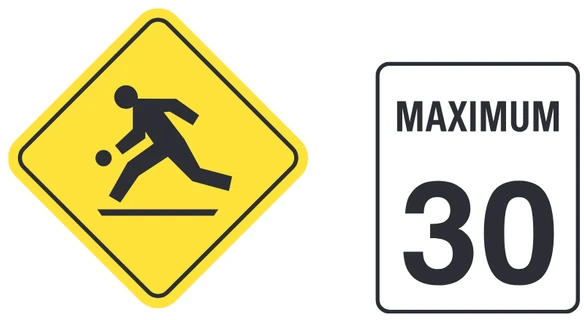
- Playground zone: a playground sign with a maximum speed sign. The limit is 30 km/h while the zone is in effect: every day from 8:30 a.m. to one hour after sunset.p. 31
- School or playground area: the same sign without a speed sign. It warns that children may be near, walking or crossing the road, so use caution.p. 31p. 32
- While a school or playground zone is in effect, you may not pass a vehicle travelling in the same direction.p. 31
- Towns and cities can set different hours by bylaw. If they do, the times are posted beneath the sign.p. 31
Construction zones
Obey the construction zone speed limit at all times, even when people and equipment aren’t working: bumps, fresh oil and loose gravel may still be there. If workers are present, fines are doubled. Obey the flag person’s signal and be ready to slow down and stop.p. 37
Information and guide signs
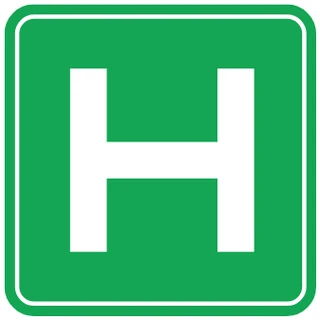
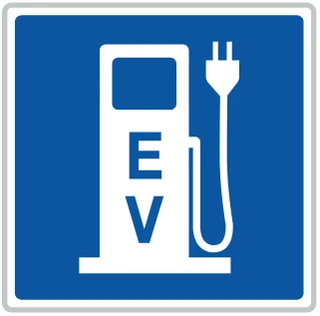
These signs tell you about routes, off-road facilities, and geographical features and points of interest: route markers, direction and distance signs, and symbols for services such as a hospital or electric vehicle charging.p. 36
Every sign, with its picture and meaning: Alberta road signs and their meanings. Ready to test yourself? Try the free road signs practice test.
Learners ask
What colour background do lane control signs have?
Black. Lane control signs are square, with a white message on a black background. The message or symbol shows the direction a vehicle must travel in that lane.p. 25p. 28
What does a green rectangle sign mean?
It gives information such as the distance to a destination, with a white message on a green background. Green signs also show transportation services, such as an airport or ferry, while blue signs point to fuel, food, lodging or assistance.p. 26
What colour are signs for fuel, food or lodging?
Blue, with a white message. Signs for transportation services, such as an airport or ferry, have a green background, and green rectangles give the distance to a destination.p. 26