

Emergency response vehicles and tow trucks
When driving you may encounter incidents that cause lane closures or narrow lanes. These incidents can include traffic accidents, disabled vehicles, spilled cargo, and highway maintenance or construction. If you see flashing lights from emergency vehicles or roadside workers such as tow trucks, snowplows, or highway maintenance vehicles, it means there is a situation ahead that requires your attention and caution.
Follow directions given by emergency personnel directing traffic. Be aware that the vehicle ahead of you may stop or reduce speed unexpectedly to view the scene. One of the most serious problems associated with these types of incidents is the risk of response personnel or equipment being struck by passing vehicles. Services that typically respond to highway incidents include:
- law enforcement
- ambulance
- fire
- towing.
Motorists must reduce speed to 60 km/h or the posted speed, whichever is lower, when passing emergency vehicles or tow trucks that are stopped with their lights flashing. This law applies to the lane(s) immediately next to the stopped vehicles. The fine for speeding in these areas is doubled. If you are not in the lane next to the stopped vehicles, you still need to be watchful and cautious. Reduce your speed and leave lots of space between yourself and emergency personnel and equipment at the scene. Also, watch for the movement of personnel around the scene.
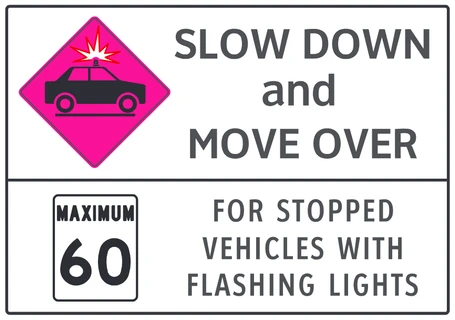
Slow down and move over: maximum 60 for stopped vehicles with flashing lights
Emergency vehicles
When an ambulance, fire, or police emergency vehicle is approaching from any direction and is sounding a siren, you must yield the right-of-way:
- Safely move your vehicle to allow the emergency vehicle passage.
- Drive as closely as possible to the right curb or edge of a two-way roadway.
- Move right or left to the nearest curb on one-way streets.
- Stop until the emergency vehicle has passed. Check that no other emergency vehicles are approaching. If you see a vehicle with flashing green lights, treat it like any other emergency vehicle. In some municipalities, volunteer fire fighters use flashing green lights on their emergency response vehicles when responding to a fire or other emergencies. Always yield to emergency vehicles with siren or lights operating. Maintain a safe following distance of at least 150 metres (500 feet).