

Signalling
Signal lights and brake lights tell other drivers what you are going to do. You must use your signal light when you are:
- moving away from the curb or parking lane
- turning left or right
- changing lanes.
When you apply your brakes, your brake lights are activated to alert other drivers that you are slowing or stopping.
Electrical signals
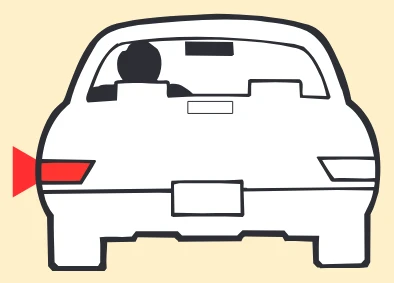
Electrical signal: left signal 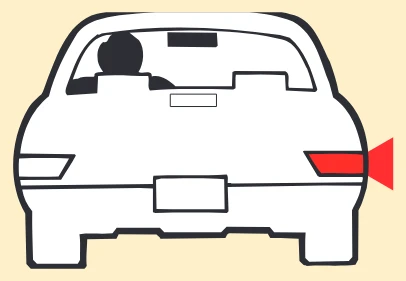
Electrical signal: right signal
Left signal · Right signal · Slowing or stopping
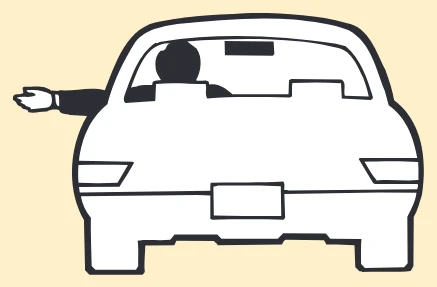
Hand signal: left signal 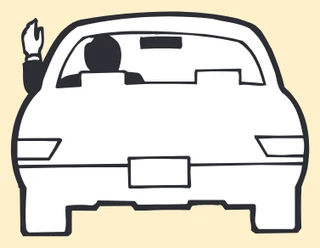
Hand signal: right signal 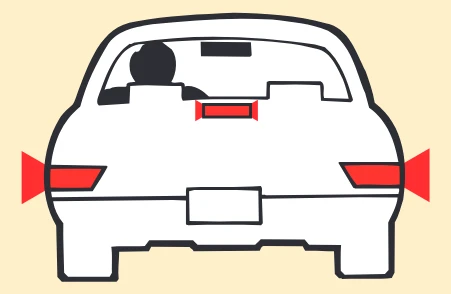
Electrical signal: slowing or stopping 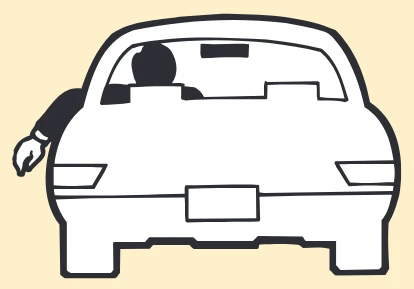
Hand signal: slowing or stopping
Hand signals
Left signal · Right signal · Slowing or stopping
Do not confuse other drivers by signaling too early or too late. Remember to turn off your turn signal light if it does not turn off automatically.
Accelerating
When you are driving your vehicle, your ability to control your speed depends on looking where you want to go and using the accelerator correctly. Gradually press on the accelerator to move the vehicle, and then hold it at the proper position for the selected speed. This will take some practice. Keep the following in mind:
- Accelerate smoothly.
- Adjust to the weather, road, and traffic conditions.
- Do not accelerate or reduce speed unnecessarily.
- Never exceed the posted speed limit.
- Do not accelerate so quickly that the vehicle’s tires spin.
- Drive with the flow of traffic to reduce the risk of being in a collision. Driving too slowly can be a hazard.
- Glance occasionally at your speedometer to check your speed.
Stopping time and distance
Knowing how much time and distance it takes to apply your brakes to completely stop your vehicle can help avoid errors in judgement and help avoid a collision. Three factors determine the time and distance it takes to stop.
Perception time
Perception time is how long it takes to recognize a situation and understand that you need to stop. This can take about three-quarters of a second. Drivers with less experience often take longer to realize a danger exists. Perception distance is how far a vehicle travels during this time.